Work in small groups
Each group collects examples, trains a classifier, puts it under pressure and compares what changed.
For primary and secondary schools · Ages 9–14
We start with the ideas behind AI classification, help children train a kit, then put their model to work in a project.
Start with a short explanation of how machines learn from examples and sort things into categories.
Collect pictures or sounds, train a model and investigate what changes its predictions.
Give the model a practical job, such as controlling a sorting arm. Children can see why the right prediction matters.
After the theory and kit practice, we introduce a project to keep the session engaging and give children a reason to use what they have learned. They return to the same ideas about examples, categories and predictions as they work towards a goal.
That connection between a classification lesson and a physical task is central to Miltalk. We design the projects to reinforce the concepts through application and support retention after the session.
Industrial waste management · Example project
Children train the Vision Kit to recognise recyclable and non-recyclable items, then use those predictions in a sorting project. This gives them a practical reason to check their model and improve its training examples.
01 · Teach the categories
Children label paper and cans as recyclable, and used tissues as general waste. The kit learns from these examples.
Illustrated activity, with an example mistake and correction. Actual predictions depend on the training data. Servo project in development.
Mini live simulation projects
Our recycling sorter is a small simulation of a waste-sorting system. A prediction from the Vision Kit controls a servo motor, connecting the classification lesson to a visible physical action.
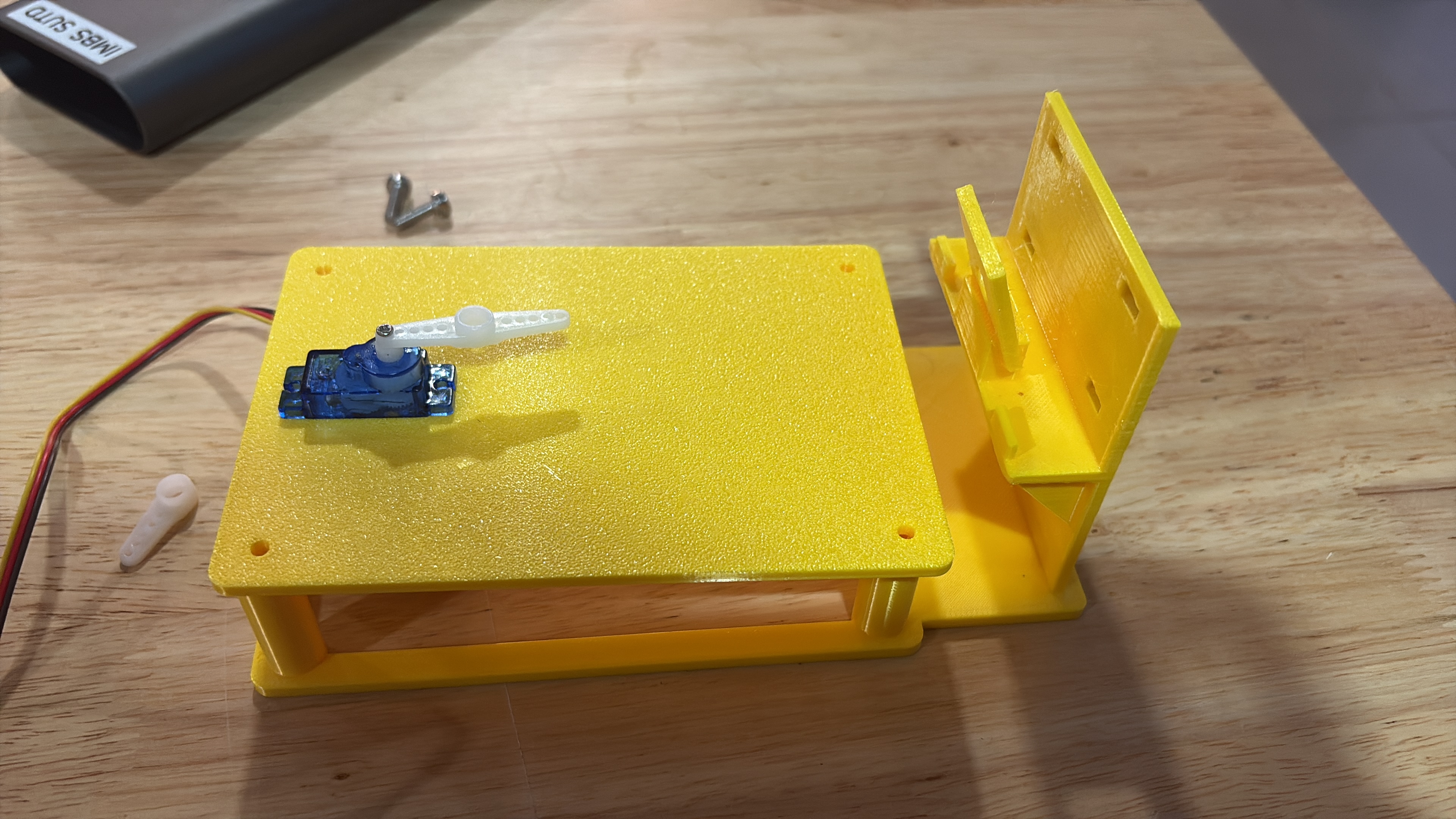
In development · Recycling sorter
Students teach the Vision Kit two categories: recyclable and non-recyclable.
In the sorter project, the kit’s predicted category determines which way the servo motor turns.
The motor moves the sorting arm. Students see how an incorrect prediction could send an item the wrong way.
We are building and testing this project now. Ask us about its availability for your session.
Projects with a purpose
We design project themes around different UN Sustainable Development Goals. The recycling sorter links to SDG 12: Responsible Consumption and Production, opening a discussion about waste, recycling and the effect of a sorting mistake.
For schools and community groups
We plan and facilitate the activities, bring the kits and guide your students. Share your year group, student numbers and available time so we can arrange a session.
Each group collects examples, trains a classifier, puts it under pressure and compares what changed.
Our team brings the kits and learning materials, sets up the activities and facilitates the session.
Share your year group, class size, available time and learning goals. We will then confirm availability and pricing.
Not ready to book? Ask a question or request a school-session outline.
About the product
Miltalk is a set of handheld learning kits that students train with their own examples. They choose two categories, collect data and test the kit’s predictions.
The Vision Kit has a camera and learns from pictures. The Audio Kit has a microphone and learns from sounds.
Miltalk is designed for children aged 9 to 14 in primary and secondary schools. We adapt the explanation and activities to the group.
No. We plan and lead the session, supply the kits and learning materials, and guide the students. Your school shares its group size, age range and scheduling requirements.
Classification gives children a clear way to explore AI: collect examples, choose categories and test a prediction. It also helps them understand familiar applications such as spam filters and image recognition.
The model’s predicted category controls what happens next. In the recycling sorter we are developing, a recyclable or non-recyclable prediction determines which way a servo motor turns the sorting arm.
A project keeps the session engaging and gives children a goal to work towards. Applying classification in a physical task lets them revisit the theory, connect a prediction to an action and practise improving their examples. We design this part of the session to reinforce learning and support retention.
Send us an enquiry with your year group, student numbers and available time. We will discuss the activities, kits, facilitation and pricing for your session.
Build an experiment with us
Tell us what your students are exploring and we can discuss a Miltalk session around it.
Enquire about a session